Chloroplast Genomes Are Not “Fixed Blueprints”
With Ms. Eranga Pawani Witharana as the first author, a research group centered in our laboratory revealed that chloroplast genomes have undergone slow but continuous structural change over tens of millions of years.
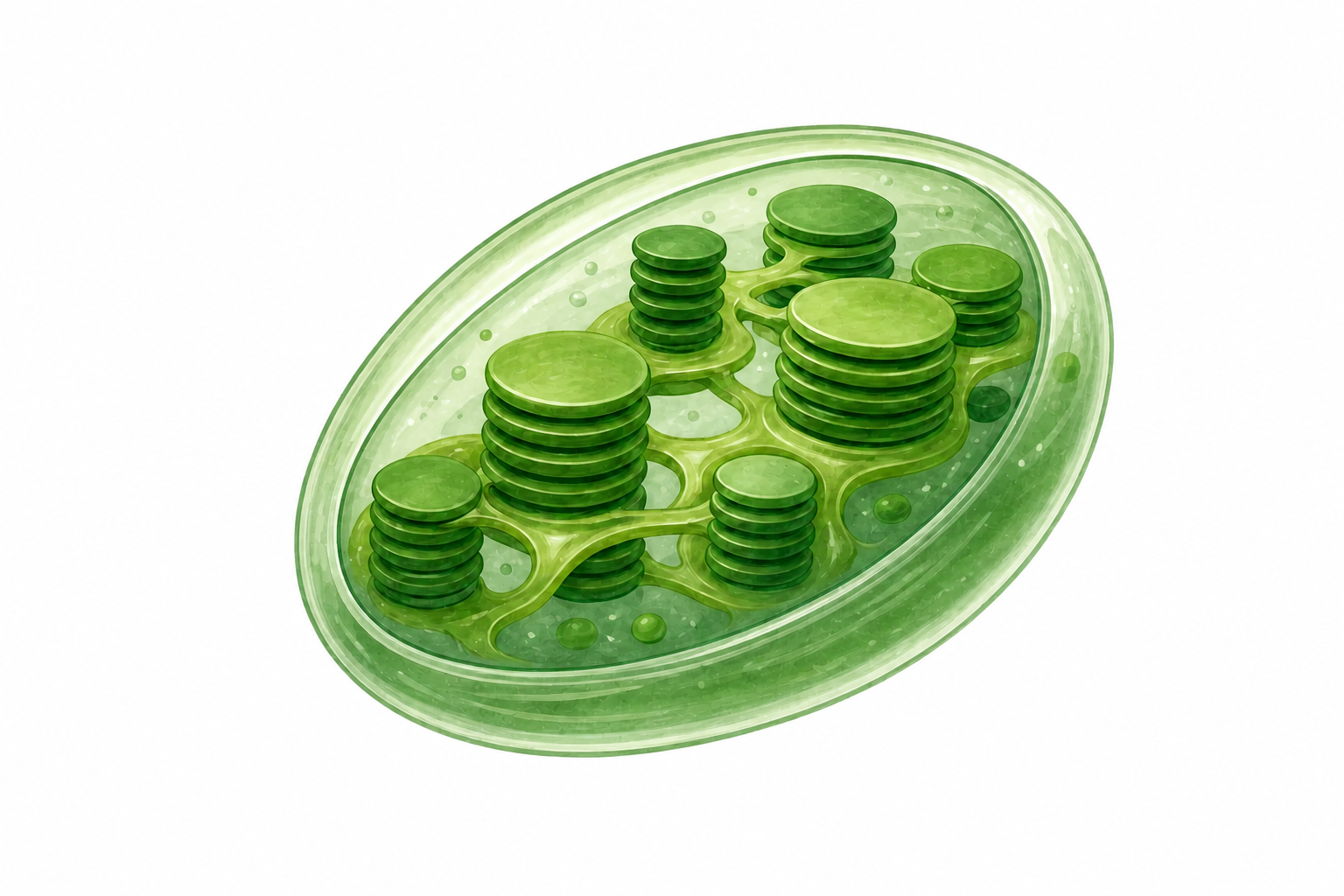
Original Research Information
Title: Ongoing structural changes highlight the dynamic nature of chloroplast genomes
Authors: Eranga Pawani Witharana, Nobuhiro Kotoda, Kiyohiko Seki, Shinji Fukuda & Yukio Nagano
Journal: Nucleic Acids Research, Volume 54, Issue 4, gkag117
Published: February 24, 2026
DOI: 10.1093/nar/gkag117
Journal metrics: 2025 Journal Impact Factor: 15.0; 2025 5-year Journal Impact Factor: 17.6; JCR Biochemistry & Molecular Biology: 14/328; 2025 CiteScore: 29.8; Scopus Genetics: 5/357 (Top 1.4%); 2025 SNIP: 5.1 (latest publisher-listed metrics as of July 2026)
Article type: Open Access
- An analysis of 28 Aurantioideae species detected structural heteroplasmy—the coexistence of two structurally distinct chloroplast genomes within the same plant.
- Recombination mediated by short inverted repeats generates a large inversion of approximately 22 kb.
- The alternative genome configurations appear to have persisted since the early Miocene, approximately 12.1–28.2 million years ago.
- The study presents a practical workflow for detecting even low-frequency chloroplast genome configurations from standard short-read data.
Chloroplast Genomes and Structural Heteroplasmy
Plant cells contain an independent genome in chloroplasts in addition to nuclear DNA. Because chloroplast genomes are relatively small and have often been treated as structurally stable, they are widely used in studies of plant phylogeny and evolution.
Chloroplast DNA occurs at high copy number within a cell, whereas nuclear loci are comparatively low-copy. This difference may allow alternative chloroplast genome configurations to coexist within an individual rather than one becoming fixed immediately. Nuclear DNA should not be described as invariably two copies per cell because ploidy, cell cycle, and tissue state can alter copy number.
Structural Change across Evolutionary Time
The study analyzed 28 Aurantioideae species and showed that intramolecular homologous recombination between a pair of 53-bp short inverted repeats (sIRs) produces an approximately 22-kb inversion in the chloroplast large single-copy (LSC) region. The coexistence of two structural configurations within an individual is termed structural heteroplasmy.
The two configurations were maintained across multiple species for approximately 12.1–28.2 million years, extending back to the early Miocene. Patterns in which a minor isoform became dominant in some lineages are consistent with a possible role for genetic drift. The findings show plastome structural evolution as an ongoing, gradual process rather than a succession of instantaneously fixed states.
Detecting Rare Genome Configurations
The analysis detected discordant paired-end reads and soft-clipped reads spanning structural breakpoints. PCR validation further showed that the low-frequency configurations were genuine and not merely sequencing or mapping artifacts.
Publication and Media Coverage
- Saga University press release
- Kagoshima University press release(Japanese/English PDF)
- United Graduate School of Agricultural Sciences, Kagoshima University webpage
Although no online article is available, the study was also featured in the Minami-Nippon newspaper on April 20, 2026.